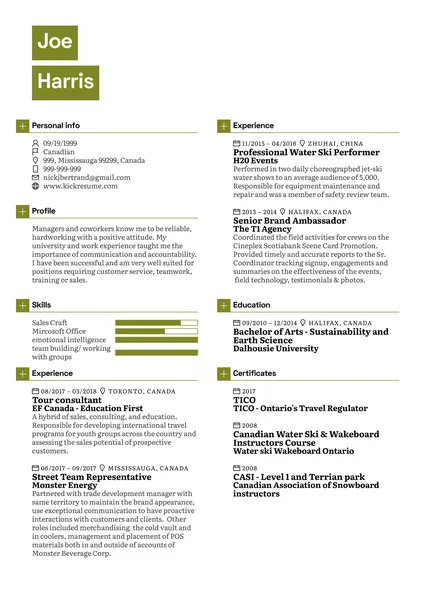
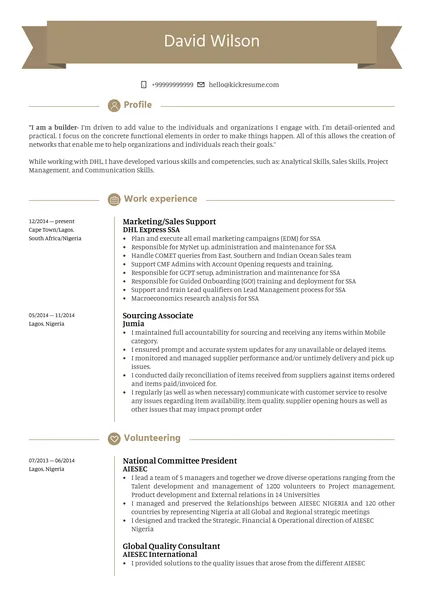
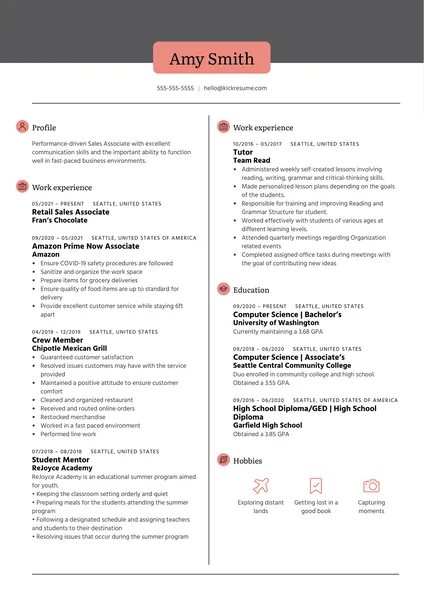
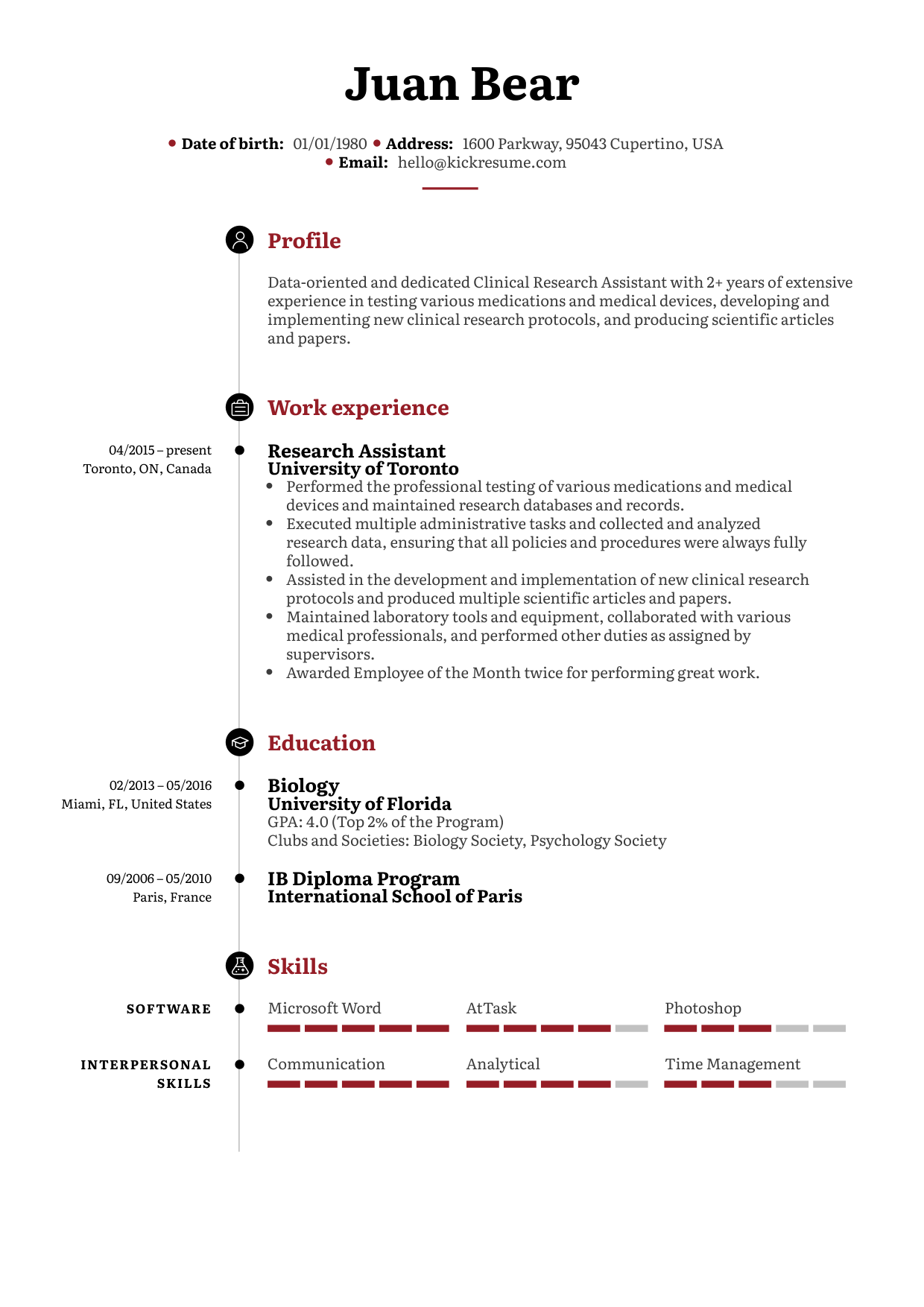
ChatGPT
 Perplexity AI
 Claude
A strong sales associate cover letter can quickly show you what retail hiring managers actually pay attention to and what makes one application stand out in a stack of dozens, because first impressions matter.
Your cover letter isn’t just a formality, it’s your chance to demonstrate customer service skills, sales results, communication style, and enthusiasm for the brand before you ever step onto the shop floor. This guide walks you through real sales associate cover letter examples, practical writing strategies, and clear, easy-to-follow advice to help you present yourself as confident, personable, and results-driven, no matter your experience level.


 See more examples like these
Keep reading to learn:
- How to analyze real sales associate cover letter samples and apply what works
- Which formatting choices make retail cover letters clean, professional, and easy to scan
- How to write a clear, polished cover letter header
- Why a strong headline can instantly elevate your first impression
- How to choose the right greeting (even when no hiring manager is listed)
- How to introduce yourself without sounding generic or overly scripted
- Which sales and customer service skills to highlight first
- How to use action verbs to sound confident and proactive
- How to write a persuasive closing that encourages an interview
- The most common sales associate cover letter mistakes (and how to avoid them)
- Why your cover letter and resume should feel aligned and cohesive
- Where to find the best job-search resources for sales associate roles
- What to expect in terms of salary and job outlook in retail sales
Still looking for your next retail opportunity? Our in-depth cover letter and resume guides, along with practical career tools, can help you turn applications into interviews and interviews into job offers.
Car sales associate cover letter sample


Why it works
- Strong opening that grabs attention: The introduction gets straight to the point by clearly stating the candidate’s background in sales and linking it to performance, showing confidence and relevance right away. This sets a positive tone and gives the hiring manager an immediate reason to keep reading.
- Highlights performance with measurable results: The cover letter uses specific examples (e.g., consistently exceeding targets, growth in sales figures, positive customer feedback) to demonstrate the candidate’s impact. Including quantifiable achievements makes the candidate’s value concrete rather than vague.
- Customer-focused language: The letter consistently emphasizes how the candidate engages with customers, listens to their needs, and creates positive buying experiences, which are the key traits for a sales associate. This helps the reader see not just what the candidate did, but how they did it in a way that benefits the employer.
What could be improved
- More tailored connection to the specific dealership or brand: While the letter mentions sales success and customer focus, it could be strengthened with a sentence or two that explains why this particular dealership appeals to the candidate (e.g., enthusiasm for the brand, knowledge of their product line, alignment with their customer service philosophy). This adds a layer of personalization that helps the application stand out even more.
- The closing paragraph could be more proactive and memorable: While it politely expresses interest in an interview, it remains fairly standard and passive. Adding a confident closing statement that briefly reinforces the candidate’s key strength (e.g., ability to drive revenue or build long-term customer relationships) would leave a stronger final impression and make the ending more persuasive.
Real estate sales associate cover letter sample

Why it works
- Clear and professional introduction: The cover letter opens with strong statements of the candidate's experience level and strong background in the sales industry.
- Relevant education and credentials highlighted early: The candidate ties their degree in Real Estate & Property Management to the position, showing they have formal knowledge relevant to the role.
- Mix of academic and real-world experience: Mentioning both academic awards (like the Dean’s Award) and professional responsibilities (like liaising with clients and property research) gives a balanced view of competence, both in skills and results.
What could be improved
- More emphasis on measurable achievements or outcomes: The letter describes duties like supporting senior employees and marketing properties, but it would be stronger with specific achievements (e.g., sales closed, list-to-sold price ratios, leads generated), which help quantify impact and performance.
- Stronger personalization toward the specific real estate company: While the letter clearly outlines qualifications, it could benefit from a more direct connection to JH International, Inc.—for example, mentioning the company’s market focus, reputation, property portfolio, or values. This would show genuine interest and make the application feel less general and more intentionally targeted.
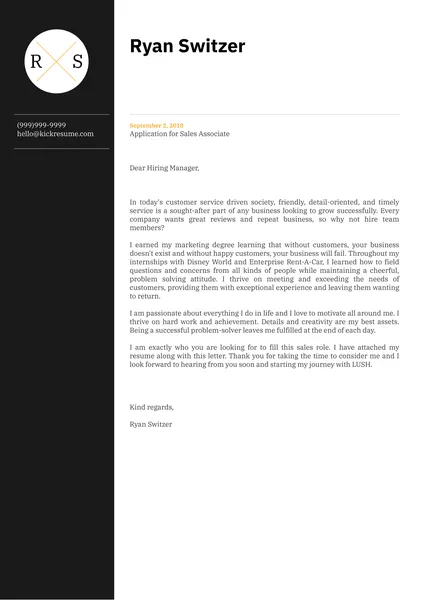
Sales associate cover letter sample

Why it works
- Brand-specific enthusiasm and cultural fit: The cover letter clearly shows genuine enthusiasm for Lush as a brand. It references the company’s values (e.g., ethical products, customer experience), which makes the application feel personalized rather than generic.
- Strong customer focus and service orientation: The candidate emphasizes customer engagement skills, such as active listening, understanding needs, and recommending products, which are key for client-facing retail roles. This aligns well with what retail managers look for in a sales associate.
- Relevant work experience communicated effectively: The letter highlights retail experience and ties it directly to impact (e.g., supporting sales initiatives, contributing to store targets, handling POS). These examples show both hands-on capability and understanding of retail workflows.
What could be improved
- Further quantify your achievements: While the letter communicates relevant experience and customer focus, it could be stronger by including specific metrics, for example - sales targets exceeded, average transaction value increases, or customer satisfaction improvements. Numbers help transform good descriptions into measurable results.
- Stronger, more distinctive opening hook: The introduction begins with a broad statement about customer service that could apply to many candidates. It would be more impactful to open with a specific achievement, short story, or direct value proposition that immediately differentiates the candidate from others and captures the hiring manager’s attention in the first sentence.
1. Formatting your sales associate cover letter for a strong first impression
If you want your sales associate cover letter to stand out, the way it looks matters just as much as what it says.
Retail and sales environments move fast. Hiring managers often review dozens of applications in one sitting. If your cover letter feels cluttered, hard to read, or overly long, it may never get the attention your experience deserves.
Here’s how to format your sales associate cover letter so it looks clean, confident, and easy to scan:
- Choose a simple, readable font: Go with reliable options like Arial, Calibri, or Times New Roman. Keep the font size between 10 and 12 points so your letter feels professional and easy on the eyes.
- Use clear spacing and short paragraphs: Avoid long walls of text. Short paragraphs with enough white space make your letter easier to skim, and that’s important when recruiters are reviewing applications quickly.
- Left-align everything: Left alignment is the safest and most professional choice. Centered or fully justified text can look awkward and distract from your message.
- Stick to a clear structure:
-
There’s no need for creative layouts. A straightforward structure works best:
- Header
- Opening paragraph
- 1-2 body paragraphs
- Closing paragraph
- Keep it to one page: Retail managers don’t need your life story. One focused page that highlights your sales skills, customer service strengths, and relevant achievements is more than enough.
- Use bullet points strategically: If you want to highlight key results such as exceeding sales targets, increasing average transaction value, improving customer satisfaction scores, or supporting visual merchandising, a few bullet points can make those achievements pop.
- Match the tone to the role: For sales associate positions, aim for professional but approachable. Confident, energetic, and customer-focused works well. You’re showing that you can represent the brand and connect with customers, not writing a corporate report.
Key takeaway
If layout isn’t your thing, using a professionally designed cover letter template can save time and help you avoid formatting mistakes, so you can focus on presenting your strengths clearly.
Formatting may not be the most exciting part of writing your cover letter, but in sales roles, presentation matters. A clean, well-structured letter sets the tone before a hiring manager even reads about your results.
You can also check out our detailed guide on how to build a cover letter that helps you land more interviews.
Create your cover letter fast with artificial intelligence.

2. Writing an effective cover letter header for sales associate roles
Let’s start with the header. It might seem like a small detail, but in sales roles, presentation and clarity matter from the very first line.
If you’re applying by email or through an online system, your header is often the first thing a store manager or recruiter sees. A clean, complete header shows that you’re organized, professional, and easy to contact, and these are the important traits for someone who will interact directly with customers every day.
Your goal is simple: make it effortless for the employer to reach you.
What to include in your sales associate cover letter header
Your contact details:
- Full name
- Professional title (optional, e.g., Sales Associate or Retail Sales Associate)
- Phone number (with area code)
- Professional email address
- LinkedIn profile (if relevant and updated)
- Personal website (optional)
The recipient’s details:
- Hiring manager’s name (if available)
- Their job title
- Store or company name
- Company address
Bad example of a sales associate cover letter header
From: Jamie T.
555-3210 | jamie@email
To: Store Manager
Why this doesn’t work: The phone number is incomplete, the email address looks informal, and there’s no effort to identify a specific person or company. In a customer-facing role like sales, this lack of attention to detail can send the wrong message.
Good example of a sales associate cover letter header
From: Jamie Thompson
(212) 555-3210
jamie.thompson@email.com | linkedin.com/in/jamiethompson
To: Laura Mitchell, Store Manager
StylePoint Retail
180 Broadway
New York, NY 10007
Why this works: The contact details are clear and professional. The phone number includes the area code, the email address looks trustworthy, and the letter is addressed to a specific person. That shows initiative and genuine interest in this particular store, not just any job.
Key takeaway
In sales associate positions, small details reflect how you’ll represent the brand. A clean, well-organized header creates a strong first impression and sets the tone for the rest of your application.
Now that your header looks polished, it’s time to craft a headline that makes hiring managers want to keep reading.
.png)
3. Crafting a strong headline that reflects your sales associate strengths
Why does your headline matter?
Because it’s the first line that tells a hiring manager who you are and what you bring to the store. And in retail, where managers review applications quickly between shifts and busy hours, you don’t have much time to make an impression.
A strong headline gives recruiters a reason to keep reading. It should quickly communicate your experience level, your key strengths, and your fit for a customer-facing sales role.
Let’s look at the difference.
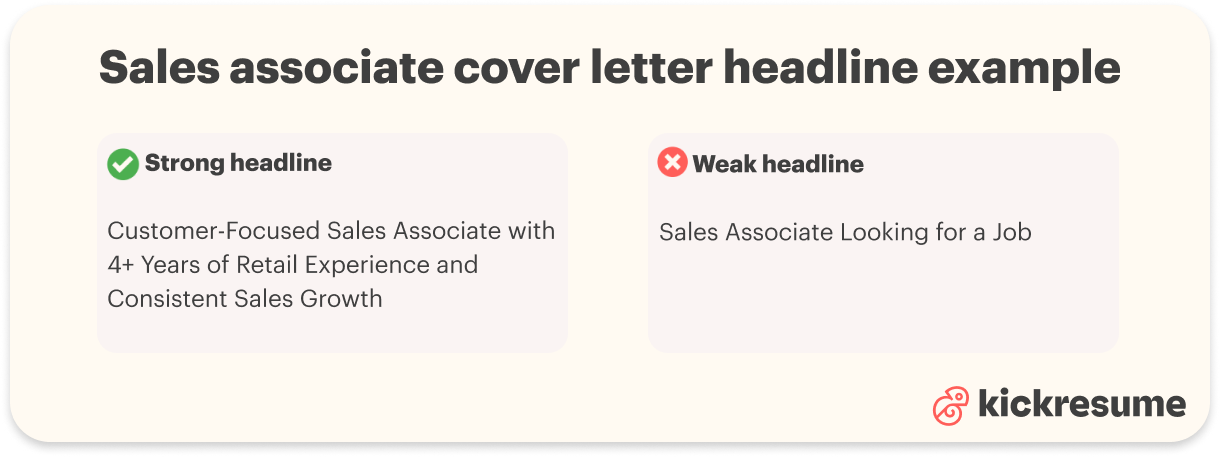
Bad example of a sales associate cover letter headline
Sales Associate Looking for a Job
Why this doesn’t work: It’s too general and doesn’t add anything meaningful. It doesn’t highlight experience, results, or specific strengths. Hiring managers already know you’re applying for a sales associate role. Therefore, your headline should tell them why you’re a strong candidate for it.
Good example of a sales associate cover letter headline
Customer-Focused Sales Associate with 4+ Years of Retail Experience and Consistent Sales Growth
Why this works better: It’s specific, because it mentions years of experience and a focus on results. It highlights value, because sales growth and customer focus are exactly what retail managers care about. And it also stands out, because it signals performance, not just participation.
If a store manager is looking for someone who can drive revenue and deliver strong customer service, this headline immediately checks both boxes.
Crafting a headline as an entry-level sales associate
If you’re just starting out or transitioning from another customer-facing role (like hospitality or service), you can still write a compelling headline. The key is to focus on transferable skills and potential.
Instead of emphasizing years of retail experience, highlight:
- Customer service skills
- Communication and interpersonal strengths
- Sales achievements (even in part-time roles)
- Product knowledge or training
- Motivation to grow in retail
Entry-level sales associate headline example
Motivated Entry-Level Sales Associate with Strong Customer Service Background and Upselling Experience
This works because it’s honest and focused on strengths. Even without years of retail experience, it positions you as someone who understands customers and can contribute to sales performance.
Key takeaway
Your headline is your positioning statement. Keep it clear, confident, and tailored to the store or brand you’re applying to, and you’ll immediately increase your chances of standing out.
4. Creating a personalized greeting that connects with sales hiring managers
Opening your cover letter with something generic like “To Whom It May Concern” can make your application feel copy-pasted. And in retail, where personality and customer connection matter, that’s not the impression you want to give.
Sales associate roles are all about communication, approachability, and attention to detail. Addressing your cover letter to a real person shows initiative and signals that you care enough to do a bit of research, which is exactly the kind of effort retail managers appreciate.
So how do you find the right name?
Here are a few practical ways:
- Check the job posting: Sometimes the store manager or hiring contact is listed directly.
- Visit the company website: Look under “About Us” or “Store Locations” for manager names.
- Search LinkedIn: Try titles like Store Manager, Sales Manager, or Retail Hiring Manager.
- Call the store: A short, polite call asking who handles hiring for the position can make a positive first impression.
Once you have a name, use it professionally:
Examples of personalized greetings
- Dear Ms. Johnson,
- Dear Mr. Taylor,
- Dear Ms. Emily Johnson,
Stick to formal titles (Mr., Ms., etc.) unless you’re certain the company culture is more casual. And always double-check spelling — small mistakes can make you look careless.
What if you can’t find a name?
Sometimes, especially with larger retail chains, the hiring manager’s name isn’t easy to track down. If you’ve made a reasonable effort, these are perfectly acceptable alternatives:
Professional fallback greetings (if you can't find their name)
- Dear Hiring Manager,
- Dear Store Management Team,
- Dear [Company Name] Recruitment Team,
These options are respectful and professional and much better than outdated, overly formal phrases.
Key takeaway
Taking a moment to personalize your greeting sets a positive tone. It shows you’re thoughtful, proactive, and genuinely interested in this specific store or brand, and those are the qualities that make a strong sales associate.
.png)
5. Writing an introduction that grabs attention as a sales associate
If you want your sales associate cover letter to stand out, your opening paragraph needs to do more than simply announce that you’re applying.
In retail, hiring managers are looking for energy, customer focus, and results. Your introduction should quickly show that you understand what the role is about - driving sales, delivering great service, and representing the brand on the sales floor.
Keep it clear and focused. You don’t need dramatic language. You just need relevance and confidence.
Here’s what you can naturally include in your opening:
- A short overview of your retail or sales experience
- A measurable achievement (sales targets, upselling results, customer satisfaction scores, etc.)
- Your customer service philosophy or selling approach
- Experience with specific products, industries, or store environments
- A reason you’re interested in this particular brand or store
- A referral (if applicable)
Key takeaway
If you’re transitioning from another customer-facing job (hospitality, call center, cashier, etc.), this is the perfect place to highlight transferable skills like communication, persuasion, teamwork, and problem-solving.
Bad example of a sales associate cover letter introduction
I’m writing to apply for the sales associate position at your store. I think I would be a good fit and look forward to learning more about the opportunity.
Why this doesn’t work: It’s generic and doesn’t mention sales, results, customer interaction, or anything specific about the store. There’s no hook, no personality, and no reason for the hiring manager to keep reading.
Good example of a sales associate cover letter introduction
I am a sales associate with over 3 years of experience in fast-paced retail environments, consistently exceeding monthly sales goals by 15% through consultative selling and strong customer engagement. In my current role, I support a high-traffic apparel store where I regularly assist 50+ customers per shift while maintaining a 95% positive feedback rating. I’m particularly drawn to your brand’s focus on quality and customer experience, and I’m excited about the opportunity to contribute to your team.
Why this works: This introduction establishes experience, includes measurable results, and highlights customer service strengths. It also shows genuine interest in the brand. In just a few lines, the hiring manager understands what this candidate brings to the sales floor.
Tips for entry-level candidates
If you’re new to retail, focus on potential and transferable skills. Sales associate roles often value attitude and communication just as much as direct experience.
You can highlight:
- Customer service or hospitality experience
- Cash handling or POS familiarity
- Communication and teamwork skills
- Volunteer or school activities involving responsibility
- Your motivation to work in retail and grow in sales
Entry-level sales associate introduction example
I’m excited to apply for the sales associate role at TrendStyle. With a background in customer service and hands-on experience handling transactions and assisting customers in a busy café environment, I’ve developed strong communication skills and a natural ability to recommend products based on customer needs. I’m eager to bring that same energy and customer-first mindset to your retail team.
Why this works: Even without formal retail experience, the candidate shows relevant strengths and enthusiasm. The focus is on customer interaction and readiness to contribute.
A strong introduction immediately shows that you understand retail isn’t just about stocking shelves, it’s about creating positive customer experiences and driving sales. Get this part right, and you’ve already made a strong first impression.
.png)
6. Highlighting your professional value as a sales associate
The body of your cover letter is where you move from introduction to proof.
This is your opportunity to show how your experience and skills on the sales floor translates into value for the store, such as more revenue, better customer experiences, and stronger team performance.
Don’t repeat your resume. Expand on it. Add context. Show impact.
How to structure the body
Keep it simple and focused:
- 2–4 short paragraphs
- Clear examples, no filler
- Easy to skim
Each paragraph should answer one question:
How do I help this store sell more and serve customers better?
Key skills employers look for in sales associates
If you’re unsure what to highlight, these are some of the most in-demand skills for sales associate roles:
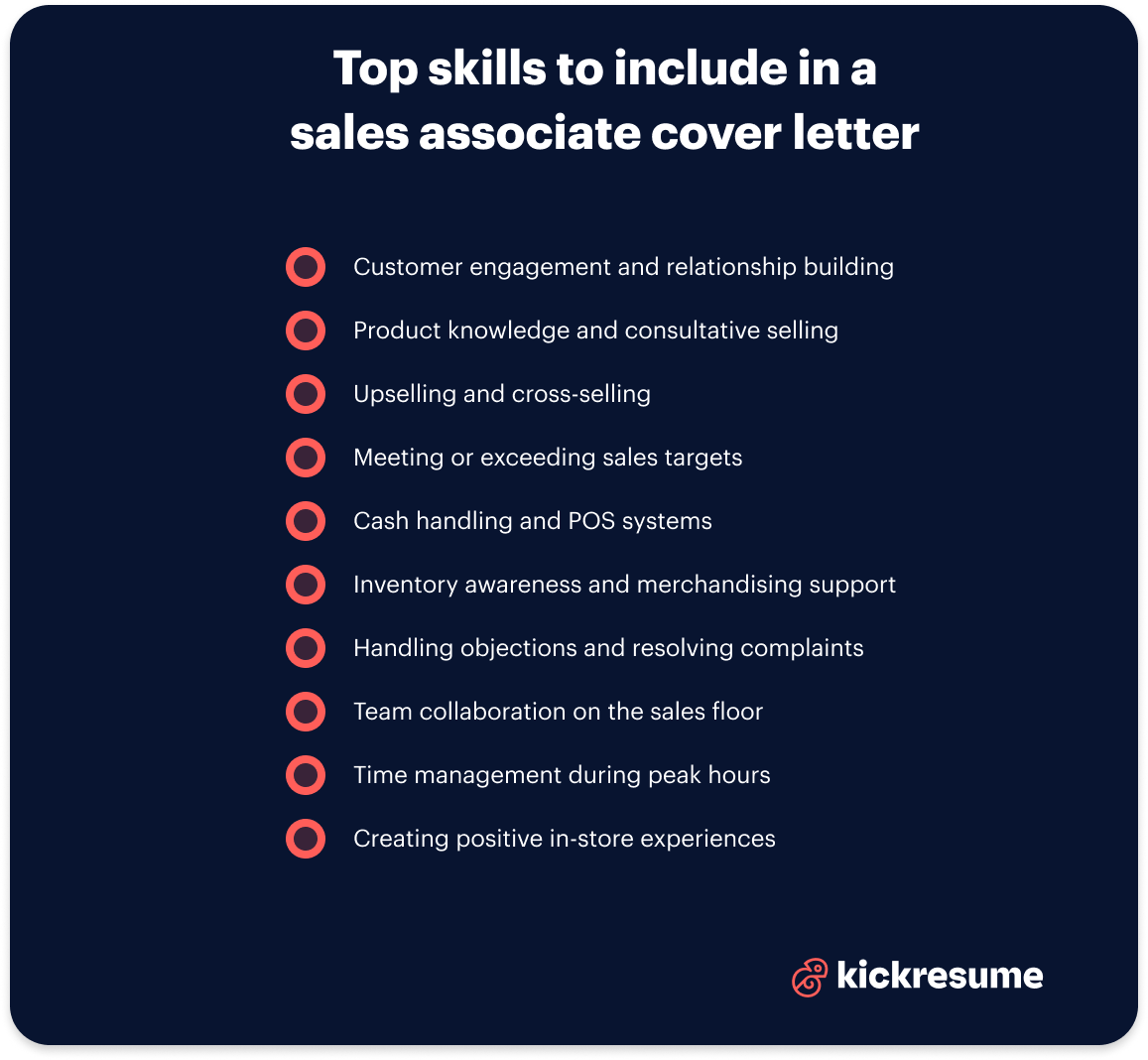
Top skills to mention in your sales associate cover letter
- Customer engagement and relationship building
- Product knowledge and consultative selling
- Upselling and cross-selling
- Meeting or exceeding sales targets
- Cash handling and POS systems
- Inventory awareness and merchandising support
- Handling objections and resolving complaints
- Team collaboration on the sales floor
- Time management during peak hours
- Creating positive in-store experiences
How to show value (not just responsibilities)
The formula is simple:
Context + numbers = credibility
Instead of saying what you were “responsible for,” show what improved because of you.
Here’s how:
- Quantify results (sales increases, conversion rates, upselling performance)
- Align with the job posting (if they emphasize customer experience, show your service metrics)
- Use short achievement examples that are easy to spot
Examples for experienced sales associates
-
In my previous role at BrightStyle Apparel, I learned that successful selling is less about pushing products and more about understanding what customers truly need. By taking the time to ask the right questions and offer thoughtful recommendations, I consistently built trust and long-term customer relationships.
- I take pride in creating a welcoming store environment where customers feel comfortable asking questions and exploring options. Whether assisting first-time buyers or returning loyal clients, I focus on making every interaction personal and attentive.
- Beyond direct sales, I actively look for small improvements that enhance the overall shopping experience — from refining product displays to supporting team members during busy shifts. I believe strong sales performance comes from collaboration and shared responsibility.
- Handling high-volume transactions and busy store hours has strengthened my attention to detail and reliability. I understand that accuracy, professionalism, and composure under pressure are just as important as closing a sale.
Tips for entry-level candidates
If you’re new to retail, focus on transferable strengths:
- Communication and people skills
- Handling fast-paced environments
- Experience working in teams
- Comfort with customer-facing roles
Retail managers aren’t just hiring experience, they’re hiring attitude and reliability.
Example for entry-level or junior sales associates
- In my previous role in hospitality, I assisted 60+ customers per shift, recommending menu items and increasing add-on sales by 10% through friendly, proactive service.
- During a part-time cashier role, I processed high-volume transactions accurately while helping maintain a positive store atmosphere during busy periods.
- Through volunteer event work, I supported product displays and assisted attendees, developing strong communication and problem-solving skills that translate directly to retail.
Key takeaway
The body of your cover letter should make one thing clear:
You don’t just stand behind the register, you actively contribute to sales, customer satisfaction, and the overall success of the store.
When hiring managers can clearly see that impact, it becomes much easier for them to picture you on their sales floor.
7. Strengthening your cover letter with powerful action verbs
Once your structure is solid and your examples are clear, there’s one simple upgrade that can instantly make your cover letter stronger: better verbs.
Action verbs transform ordinary statements into confident, sales-driven claims.
Compare these two versions:
Without action verbs
I was responsible for assisting customers and recommending products.
vs.
With strong action verbs
Guided customers through product selections and increased average transaction value through targeted upselling.
The outcome: Same responsibility, but completely different energy.
The second version sounds proactive, confident, and performance-focused, and that’s exactly how a strong sales associate should come across.
Action verbs that work well for sales associate roles
For retail and sales-focused positions, use verbs that signal initiative, persuasion, and measurable contribution.
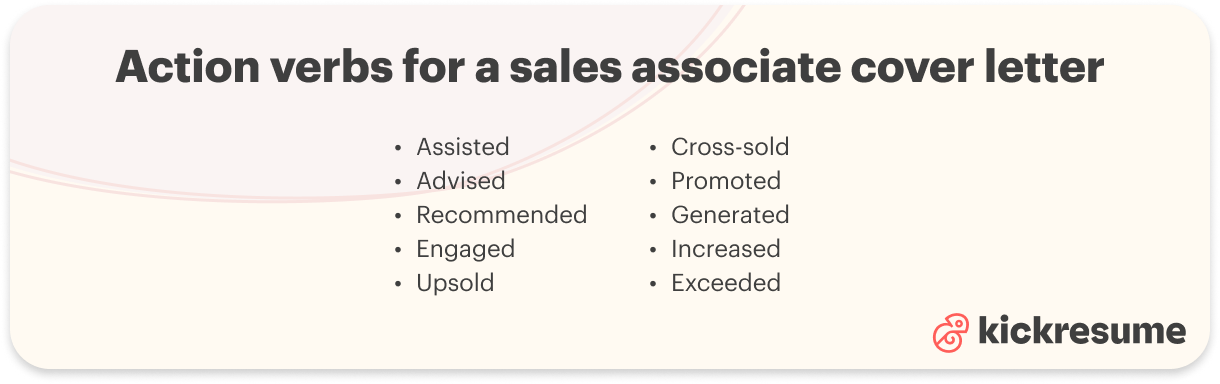
Effective action verbs for sales associates
- Assisted
- Advised
- Recommended
- Engaged
- Upsold
- Cross-sold
- Promoted
- Generated
- Increased
- Achieved
- Exceeded
- Resolved
- Handled
- Supported
- Merchandised
These verbs help you move beyond describing tasks and instead show how you contributed to sales and customer satisfaction.
How to use action verbs effectively
The goal isn’t to sound dramatic. It’s to sound capable and results-driven.
Here’s how to make them work:
- Start bullet points or sentences with a strong verb
- Connect the verb to a result whenever possible
- Avoid repeating the same word multiple times
- Match the verb to your level of responsibility
Example #1:
No action verbs included:
Handled customer transactions.
After including action verbs:
Processed high-volume POS transactions accurately while maintaining fast checkout times and positive customer interactions.
Example #2:
No action verbs included:
Helped customers choose products.
After including action verbs:
Advised customers on product features and increased add-on sales by 15% through consultative recommendations.
Action verbs and ATS: why they matter
Action verbs don’t just improve readability. They also help with Applicant Tracking Systems.
Retail job descriptions often include words like increased, achieved, assisted, resolved, upsold, or supported. Naturally incorporating those same terms into your cover letter increases your chances of aligning with the system and the hiring manager.
Key takeaway
Scan the job ad carefully and mirror the language they use. If they emphasize “customer engagement,” “sales targets,” or “merchandising support,” reflect those priorities in your verbs and examples.
Strong verbs make it clear that you don’t just show up to work, but that you also actively contribute to sales, customer experience, and store performance. And that’s exactly what retail employers want to see in a sales associate.
8. Writing a confident and persuasive closing for your sales associate cover letter
Your closing paragraph may be brief, but it’s your final opportunity to make an impression.
Think of it like closing a sale. You reinforce the value, express enthusiasm, and clearly invite the next step while staying professional and approachable.
A strong sales associate cover letter closing should include:
- A thank-you for the recruiter’s time
- A quick reminder of your value (sales performance, customer service, teamwork)
- Genuine interest in the company or store
- A clear call to action (openness to an interview)
- Your contact details and availability
- A professional sign-off
Let’s look at what doesn’t work first.
Bad example of a sales associate cover letter conclusion
I hope you consider my application. Thank you for your time. I look forward to hearing from you.
Best,
Alex
Why this falls flat: This ending feels generic and doesn’t reinforce anything memorable. It doesn’t highlight strengths, doesn’t show enthusiasm, and doesn’t confidently encourage next steps, which is especially important in a customer-facing, sales-driven role.
Good example of a sales associate cover letter conclusion
Thank you for considering my application. With my experience exceeding sales targets, delivering attentive customer service, and supporting visual merchandising efforts, I’m confident I can contribute positively to your store’s performance and customer experience. I’m excited about the opportunity to join your team and represent your brand on the sales floor.
I would welcome the opportunity to discuss how my skills align with your needs. I’m available at your convenience and can be reached at (555) 123-4567 or alex.morgan@email.com. I look forward to speaking with you.
Sincerely,
Alex Morgan
Why this works: This version reinforces sales impact, customer focus, and enthusiasm for the brand. It sounds confident without being pushy and clearly invites the hiring manager to take the next step.
Key takeaway
Your closing doesn’t need to be dramatic. It just needs to be purposeful.
Remind them why you’re a strong sales associate, show genuine interest in the role, and make it easy for them to contact you. A confident ending leaves the kind of impression retail employers appreciate - professional, positive, and ready to contribute.
.png)
9. Avoiding common mistakes in sales associate cover letters
Even a well-written sales associate cover letter can lose momentum if it includes avoidable mistakes. And in retail, where presentation, communication, and attention to detail matter, those small errors can quickly hurt your chances.
Here are the most common pitfalls sales associate candidates run into (and how to avoid them):
- Sending the same letter to every store: A generic cover letter feels obvious. A luxury boutique, a fast-fashion retailer, and a big-box store each value slightly different things, such as product knowledge, upselling skills, speed, visual merchandising, or customer experience. Show that you understand the specific brand and customer base.
- Being vague about results: Saying “I’m good at sales” isn’t persuasive. Retail is performance-driven. If possible, include numbers, like sales targets exceeded, average transaction value increases, loyalty sign-ups, conversion rate improvements, or customer satisfaction scores.
- Focusing only on what you want: It’s fine to mention growth goals, but your letter should primarily address the store’s needs: driving sales, delivering excellent customer service, maintaining store presentation, and supporting team performance.
- Repeating your resume word for word: Your resume lists duties. Your cover letter should add context. Explain how you handled busy sales periods, turned browsing customers into buyers, supported visual merchandising updates, or resolved customer concerns professionally.
- Ignoring the job posting details: Retail job ads often highlight key expectations like weekend availability, POS system familiarity, upselling, inventory handling, or teamwork. If the posting emphasizes something specific, address it directly to show you read it carefully.
- Sounding overly aggressive or pushy: Confidence is important in sales. But there’s a difference between confident and pushy. Employers want sales associates who are approachable, helpful, and customer-focused, not overly aggressive.
- Typos and careless errors: Retail is detail-oriented. Mistakes in store names, sloppy formatting, or grammar errors can signal carelessness. Always proofread carefully and double-check company names and role titles.
- Forgetting the customer experience: Sales associates aren’t just there to “hit numbers.” They represent the brand. If your letter focuses only on sales targets and ignores customer service, teamwork, and store standards, it may feel incomplete.
Key takeaway
Avoiding these mistakes isn’t about perfection. It’s about showing professionalism and care. Take a few extra minutes to tailor and refine your letter. That extra effort can make your application stand out in a competitive retail hiring process.
10. Pairing your sales associate cover letter with a strong resume
Before submitting your application, make sure your sales associate cover letter is supported by a great sales associate resume that reinforces the same message. These two documents shouldn’t feel disconnected, on the contrary - they should work together to present a clear, consistent story about your sales ability and customer service skills.
They play different roles, but they share one purpose: convincing the employer that you’re a strong addition to the sales floor.
Here’s how they complement each other:
- Your resume is structured and concise. It highlights your retail experience, sales performance, product knowledge, POS skills, and measurable results in a clean, easy-to-scan format.
- Your cover letter adds personality and context. It explains how you approach customer interactions, how you contribute to team goals, and why you’re interested in this specific store or brand.
Together, they show both performance and attitude, which are the two key factors in retail hiring.
How to make your resume and cover letter feel cohesive
A polished retail application isn’t just about content. Presentation matters too.
To make your documents feel like a professional set:
- Use the same header format: Your name, phone number, email, and LinkedIn (if relevant) should appear consistently on both documents.
- Stick to one font family: Clean fonts like Arial, Calibri, or Helvetica work well. Keep sizing and heading styles aligned.
- Match margins and spacing: Consistent spacing makes your application look organized and intentional.
- Keep design subtle: Retail employers value clarity over flashy layouts. If you use a light accent color on your resume, mirror it lightly in your cover letter for consistency.
If formatting isn’t your favorite task, using matching resume and cover letter templates can make the process much easier. A coordinated design instantly makes your application look more professional.
When your resume and cover letter align in both message and appearance, your application feels thoughtful, polished, and retail-ready.
Try our AI Resume Writer and have your resume ready in minutes!

11. Job-search resources for sales Associates
With your sales associate cover letter and resume ready to go, it’s time for the most important step, which is actually landing interviews. The good news? Retail hiring happens year-round, and there are plenty of platforms where sales associate roles are posted daily.
To help you speed things up, here are reliable resources where you can find up-to-date sales associate job listings:
Retail & sales-specific job boards
These platforms focus specifically on retail and sales roles:
- RetailChoice (UK retail jobs)
- Retail Jobs (US retail-focused listings)
- iHireRetail
- SalesJobs.com (sales-focused roles, including retail)
General job search engines (filter for sales associate roles)
These large platforms let you filter by location, brand, and experience level:
- Indeed – Sales Associate Jobs
- Glassdoor – Sales Associate Jobs
- ZipRecruiter – Sales Associate Jobs
- SimplyHired – Retail & Sales Roles
- Monster – Retail Sales Jobs
Company career pages (highly recommended shortcut)
Many retail brands prefer candidates who apply directly through their website. If you already have target companies in mind (e.g., Nike, Zara, Sephora, Target, H&M, Apple Store, etc.), go straight to their “Careers” page and search for store-level openings.
This often gives you:
- Faster response times
- Access to roles not listed on job boards
- A chance to tailor your application directly to the brand
Networking & professional Platforms
Retail is people-driven, and so is hiring.
Follow brands you’re interested in, connect with store managers or recruiters, and watch for hiring announcements.
- In-store inquiries: Don’t underestimate the power of walking into a store with your resume (especially for local boutiques and smaller retailers). Many sales associate roles are filled through proactive candidates.
Courses & skill development platforms
If you want to boost your competitiveness, especially for commission-based or high-end retail roles:
Look for courses in:
- Retail sales techniques
- Customer psychology
- Upselling & cross-selling
- Visual merchandising
- Communication skills
No matter how many roles you apply for, always tailor your cover letter and resume to match the specific store, brand, and job description. Retail employers look for candidates who understand their customers, and that starts with understanding their business.
Customer Service Career Outlook in 2026
Customer service representative roles are expected to fall by 5 percent between now and 2034, (Source: U.S. Bureau of Labor Statistics)
Even so, roughly 341,700 job openings are projected each year, mainly due to career changes and retirements.
IBM reports that about 70% of companies already use AI in customer service, and you can feel the shift in everyday support. Chatbots handle simple questions, systems route calls, and AI helps draft replies.
Still, people are essential for tricky issues, emotional moments, and high-value customers, so in 2026 the role is shifting toward problem-solvers who step in when automation cannot.
Average US base salaries across popular Customer Service roles:
- Call Center Operator: $40,329/year
- Client Relations Manager: $65,755/year
- Customer Support Representative: $67,088/year
- Customer Support Coordinator: $40,152year
- Sales Associate: $59,980/year
- Sales Representative: $82,744/year
These salary estimates come from Indeed (as of January 2026), and are based on anonymous submissions from workers, along with salary data from job postings on the platform over the last 36 months. Exact figures vary by location, company size, and experience level.
Overall, while the total number of customer service roles is expected to decline, the consistent demand for replacements means there are still plenty of opportunities in the field.
Sales Associate Cover Letter FAQ
Do I need sales experience to apply for a sales associate position?
Not necessarily. Many sales associate roles are entry-level.
If you don’t have direct sales experience, highlight transferable skills such as:
- Customer service
- Communication
- Problem-solving
- Handling cash or POS systems
- Working in fast-paced environments
Employers value attitude, reliability, and willingness to learn just as much as prior retail experience.
What should I include in a sales associate cover letter?
A strong sales associate cover letter should include:
A brief introduction with your interest in the role
- Relevant sales or customer service experience
- 1–2 measurable achievements (e.g., sales growth, upselling results, customer satisfaction scores)
- Key skills such as communication, product knowledge, and teamwork
- A confident closing with a call to action
Avoid repeating your resume word for word. Use the cover letter to explain how you deliver results, not just what you did.
How can I make my sales associate cover letter stand out?
To stand out:
- Quantify your achievements (e.g., “increased average basket size by 15%”)
- Mention the specific store or brand and why you want to work there
- Show product knowledge or enthusiasm for the company
- Keep your tone confident but not pushy
- Use a creative cover letter template to impress right off the bat
Retail hiring managers look for candidates who can connect with customers and represent the brand professionally.
Should I tailor my cover letter for each sales associate job?
Yes. Always tailor it.
Different retail stores prioritize different things:
- Luxury retail may focus on personalized service
- High-volume stores may value speed and efficiency
- Commission-based roles may emphasize closing and upselling
Adjust your examples and keywords to reflect the job posting. This also improves your chances of passing ATS scans.
Is a cover letter necessary for a sales associate position?
Some retail jobs may not require one, but submitting a cover letter gives you a competitive advantage.
It allows you to:
- Show personality and communication skills
- Explain availability or schedule flexibility
- Highlight enthusiasm for the brand
- Clarify career goals
Even for entry-level roles, a well-written cover letter signals professionalism and effort.
How long should a sales associate cover letter be?
Your sales associate cover letter should fit on one page and typically stay between 250–400 words. Keep it concise and focused. Hiring managers in retail often review many applications quickly, so short paragraphs and clear examples work best.